A Different Way of Seeing Resilience
After disruption, organisations often default to a simple explanation:
we weren’t prepared.
The response is predictable — expand scenarios, strengthen plans, improve readiness.
But many incidents don’t fail because preparation was absent.
They fail because systems behave differently under stress than expected.
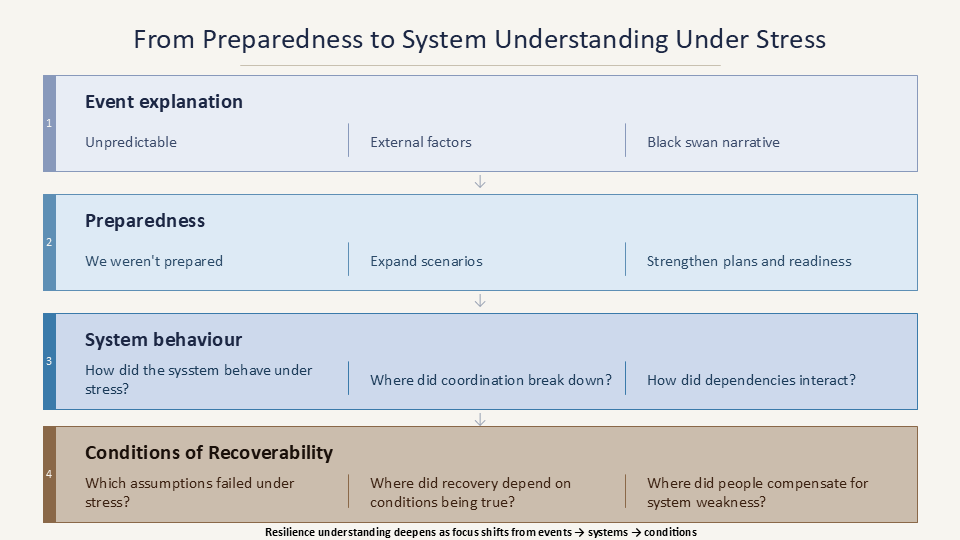
The shift is subtle, but important.
Moving beyond preparedness means focusing less on the event, and more on how the system behaves when assumptions are strained.
That’s where hidden dependencies surface, coordination begins to fracture, and recovery becomes conditional rather than guaranteed.
Understanding those conditions — not just preparing for scenarios — is what ultimately determines whether a service holds or fails.
Fragility By Design
Featured